If you’re expanding your business in Tennessee and traditional commercial properties don’t fit your needs, built-to-suit development might be the solution you’ve been looking for. But here’s the truth: most people enter these deals with unrealistic expectations about costs, timelines, and how the numbers actually work.
Let’s pull back the curtain on built-to-suit commercial real estate development in Tennessee and the Southeast. We’re breaking down what you really need to know before signing on the dotted line.
What Built-to-Suit Actually Means
A built-to-suit arrangement is exactly what it sounds like: a developer constructs a commercial building designed specifically for your business needs, and you lease it long-term. You get a custom facility without the capital outlay of purchasing land and funding construction yourself.
This approach has become increasingly popular across Tennessee, from Memphis to Nashville to Knoxville, particularly for medical facilities, retail chains, industrial operations, and specialty businesses that need specific layouts or equipment specifications.
The appeal is obvious. You maintain capital for operations and growth rather than tying it up in real estate. You get exactly what you need, where you need it. And you can often stay in your established market while expanding your footprint.
But the devil is in the details, and those details involve some complex financial structures that many tenants don’t fully understand going in.
The Real Story Behind Built-to-Suit Pricing
Here’s where things get interesting, and where many tenants get surprised.
Triple Net Leases: The Standard Structure
Most built-to-suit deals in Tennessee are structured as triple net (NNN) leases. This means you’re paying base rent plus your proportionate share of property taxes, insurance, and common area maintenance (CAM).
Your monthly payment isn’t just covering the landlord’s mortgage. It’s factoring in:
- Land acquisition costs
- Construction hard costs
- Soft costs (architects, engineers, permits)
- Developer profit
- Ongoing operational expenses
- Property management fees
The base rent is typically calculated to give the developer a specific return on their total investment, usually in the 7-9% range for commercial real estate Tennessee projects, though this varies based on property type and location.
Tenant Improvements: Who Pays What?
This is where negotiations get nuanced. In a built-to-suit arrangement, the entire building is essentially a tenant improvement. But the cost allocation breaks down like this:
Standard shell costs (foundation, exterior walls, roof, basic HVAC, electrical, and plumbing) are typically built into the base rent calculation. These are amortized over the lease term, often 15-20 years for built-to-suit projects.
Specialized improvements (custom equipment, specialized electrical or plumbing beyond code, high-end finishes) might be handled differently:
- Added to the base rent calculation (increasing your monthly payment)
- Paid upfront by the tenant as a capital contribution
- Structured as a tenant improvement allowance with overage paid by tenant
The key is understanding exactly which costs are included in your rent and which aren’t. We’ve seen deals where tenants assumed certain improvements were covered, only to receive a six-figure bill before move-in.
The Amortization Game
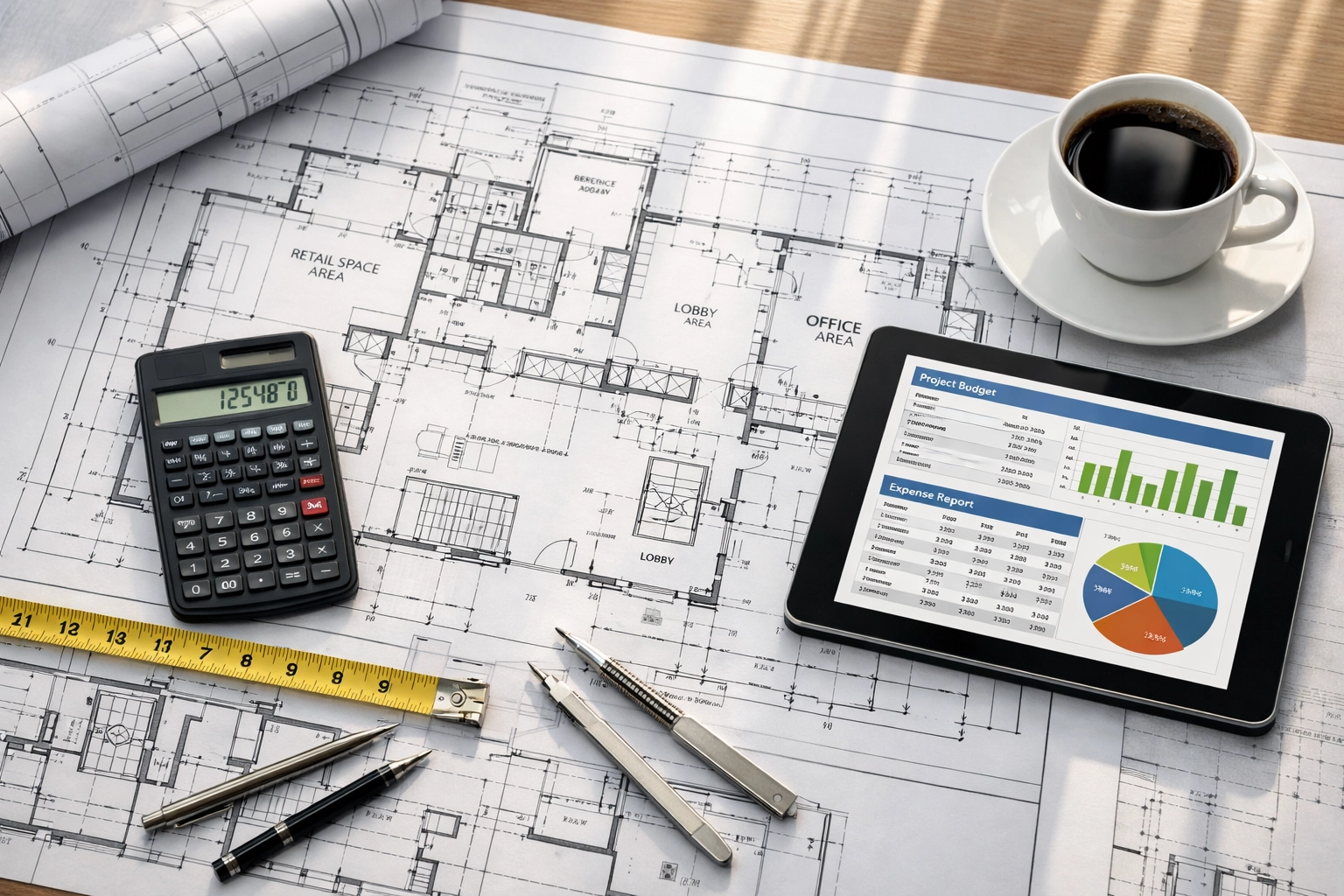
When tenant improvement costs are rolled into rent, they’re amortized over the initial lease term. Here’s a simplified example:
If your total project cost is $2 million and the developer wants an 8% return, your annual base rent would be approximately $160,000 (before NNN charges). Over a 20-year lease, you’re essentially paying back that $2 million plus the developer’s required return.
Understanding this math is crucial when evaluating whether built-to-suit makes sense versus buying your own building.
Timeline Realities: It Takes Longer Than You Think
Ask most developers about timeline, and they’ll give you the best-case scenario. The reality of built-to-suit commercial real estate development in the Southeast? Add padding.
Phase 1: Site Selection and Due Diligence (2-4 months)
Before construction even begins, you need:
- Site identification and acquisition
- Phase I environmental assessment
- Geotechnical investigation
- Survey and boundary verification
- Title work and legal review
In Tennessee, certain areas move faster than others. Rural counties may have simpler processes but limited suitable sites. Urban areas like Nashville or Memphis offer more options but more competition and complexity.
Phase 2: Design and Permitting (4-8 months)
This phase often takes longer than anticipated:
- Architectural design and revisions
- Engineering plans (civil, structural, MEP)
- Zoning approval or variance requests
- Building permit applications
- Utility coordination and approvals
Tennessee municipalities vary widely in permitting timelines. Some smaller cities can turn around permits in 4-6 weeks. Larger jurisdictions might take 12-16 weeks or longer, especially if your project requires zoning changes or special use permits.
Phase 3: Construction (6-12 months)
Actual construction time depends on:
- Building size and complexity
- Weather delays (yes, this matters)
- Supply chain issues (still a factor in 2026)
- Contractor scheduling and availability
- Inspection schedules
For a typical 10,000-15,000 square foot retail or medical facility in Tennessee, plan on 8-10 months of construction time. Larger industrial or complex medical facilities can easily stretch to 12-18 months.
Total realistic timeline: 14-24 months from initial conversations to occupancy.
If someone promises you faster, ask lots of questions.
Deal Structures: Standard vs. Reverse Built-to-Suit
There are two primary ways to structure a built-to-suit deal, and the differences matter.
Standard Built-to-Suit
In this traditional structure:
- Developer finds or owns the land
- Developer obtains construction financing
- Developer builds to your specifications
- You sign a long-term lease upon completion
- Developer refinances into permanent financing
Your main obligation is the lease itself. The developer carries all development risk, which is why they require long-term lease commitments (typically 15-20 years) and strong tenant creditworthiness.
Reverse Built-to-Suit
In a reverse structure:
- You (the tenant) purchase or control the land
- You hire the developer/builder
- Upon completion, you sell the property to an investor
- You simultaneously sign a long-term lease with that investor
This approach can sometimes result in better lease terms because you’re controlling more of the process. However, it requires significant upfront capital and exposes you to development risk during construction.
We’ve guided clients through both structures. The right choice depends on your capital position, risk tolerance, and long-term business plans.
Lease Structure Considerations
Beyond the basic deal structure, pay attention to:
Rent escalations: Most built-to-suit leases include 2-3% annual increases or CPI adjustments. Negotiate caps on these increases.
Option periods: Secure multiple five-year renewal options at predetermined rates or formulas. This protects you from dramatic rent increases after your initial term.
Assignment and sublease rights: What happens if your business changes? Can you sublease part of the space? Can you assign the lease if you sell your business?
Termination clauses: While rare in built-to-suit deals, some include early termination options (usually with significant penalties).
Why Tennessee Built-to-Suit Projects Make Strategic Sense
The Southeast, and Tennessee specifically, offers distinct advantages for built-to-suit commercial real estate development:
Lower land costs compared to major metros on the coasts make projects financially viable at lower rent rates.
Business-friendly regulations generally mean faster permitting and fewer bureaucratic hurdles.
Growing markets across Tennessee: from the Memphis medical district to Nashville’s booming suburbs to emerging markets like Jackson, Clarksville, and Murfreesboro: provide strong fundamentals for long-term lease commitments.
Skilled labor availability and competitive construction costs keep project budgets reasonable.
For businesses expanding in the Southeast, built-to-suit often delivers better value than trying to retrofit existing space or relocating to a less-ideal location.
How Buchanan Realty Group Guides Clients Through the Process
Built-to-suit projects are complex. That’s where having experienced advisors makes all the difference.
At Buchanan Realty Group, we walk clients through every phase:
Financial analysis: We help you understand the true cost comparison between built-to-suit, purchasing, or traditional leasing. No surprises about what you’re actually paying over the lease term.
Site selection: Leveraging our deep knowledge of Tennessee and Southeast markets, we identify locations that fit your operational needs and growth strategy.
Developer vetting: Not all developers are created equal. We help you select partners with proven track records in your property type.
Lease negotiation: From TI allowances to rent escalations to option periods, we negotiate terms that protect your interests.
Project oversight: Even after lease signing, we help monitor construction progress to ensure your building is delivered on time and to specification.
The goal isn’t just getting you into a new building: it’s ensuring that building supports your business growth for decades to come.
Your Next Steps
If you’re considering built-to-suit development in Tennessee or the Southeast, start with these questions:
- What are my exact space requirements, both now and in 5-10 years?
- What’s my realistic budget, including all occupancy costs?
- What’s my timeline, and can my business wait 18-24 months?
- What lease terms am I comfortable committing to?
- Do I have the financial strength to secure favorable lease terms?
Built-to-suit can be an exceptional solution for the right business at the right time. But it requires clear-eyed understanding of the financial structures, realistic timelines, and long-term commitment involved.
Want to explore whether built-to-suit makes sense for your business? Let’s talk through your specific situation and run the numbers together. Contact our team to schedule a consultation.
Because when it comes to built-to-suit commercial real estate development, what you don’t know can cost you: and what you do know can set your business up for decades of success.