Welcome to 2026, where the spreadsheets are cleaner, the interest rates are (mercifully) predictable, and the phrase "6.2% cap rate" is being thrown around more than a football at a SEC tailgate. If you’ve spent any time in investment sales commercial real estate over the last few years, you know we’ve moved past the "Great Repricing" era. The dust has settled, the shock of 2023–2024 is a distant memory, and we are finally looking at a stabilized market. But here’s the million-dollar question (or multi-million, depending on your portfolio size): Does that 6.2% headline figure actually tell the whole story, or is it just a shiny number designed to make us feel like we have everything under control?
At Buchanan Realty Group, we’ve been watching the commercial real estate Southeast landscape transform. The reality is that while a 6.2% cap rate is a significant benchmark for 2026, its role has shifted. It’s no longer the primary driver of value: it’s the entry fee.
The New Anchor: Why 6.2% is the Magic Number for Industrial
The national stabilized industrial cap rate hit the 6.2% mark in late 2025, and as we move through 2024, it’s proving to be more than just a passing trend. This figure represents a "market clearing" level. In simpler terms, it’s the point where buyers and sellers finally stopped staring at each other across the negotiation table like they were in a high-stakes standoff in a Western movie.
This stability signals that pricing is now aligned with long-term fundamentals rather than the capital market distortions we saw during the post-pandemic frenzy. For industrial assets specifically, the market is largely balanced. We’ve seen vacancy rates stabilize and eCommerce growth normalize into a steady, predictable climb.
However, if you’re looking at a 6.2% cap rate and thinking, "Great, I know exactly what this deal is worth," you’re only reading the first chapter of the book. In 2026, a 6.2% cap rate doesn't predict returns; it simply validates the current market level. The real work: and the real profit: now lies in execution.

From Pricing Volatility to Execution Risk
In the "old days" (which, in real estate time, was about three years ago), the biggest risk was pricing volatility. You didn't know if your exit cap would be 100 basis points higher by the time you finished your coffee. Today, the work of finding pricing clarity is largely done. The risk has shifted from what you pay to what you do once you own it.
In investment sales commercial real estate, the focus has moved to:
- Operational Execution: Can you manage the asset efficiently enough to maintain that NOI?
- Performance: Are your tenants actually growing, or are they just surviving?
- Portfolio Management: How does this individual asset balance your overall exposure to the Southeast market?
We’re seeing a shift where investors prioritize income durability over headline yields. A 6.2% yield is great, but if the income is shaky or the tenant has one foot out the door, that number is a vanity metric. This is why our valuation services have become so critical: we’re looking deeper than the surface-level cap rate to ensure the underlying math holds up over a five-to-ten-year hold.
The Southeast Context: Why Regional Nuance Beats National Averages
National averages are like weather reports for the entire country: interesting, but useless if you’re trying to figure out if you need an umbrella in Jackson, Tennessee. When we talk about commercial real estate Southeast, the 6.2% benchmark takes on a different flavor.
The Southeast continues to benefit from a cocktail of population growth, business-friendly environments, and a lower cost of living compared to the coastal hubs. This has created a "floor" for cap rates that many other regions simply don't have. While a 6.2% industrial cap might be the national average, high-quality assets in high-growth Southeast corridors are still commanding a premium because the rent growth potential is simply higher here.
Take a look at the retail sector as a proxy for this growth. When people move here, they spend money here.
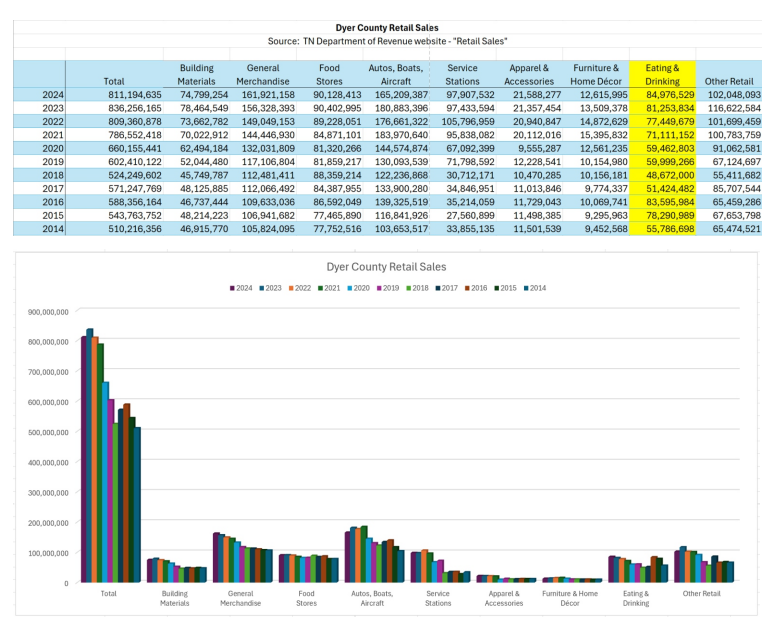
As shown in the Dyer County data, we’ve seen consistent annual growth across all sectors, with total retail sales reaching $811M in 2024. General merchandise and dining are leading the charge. For an investor, this isn't just a chart: it’s a map of where the money is flowing. If you are looking at a retail investment in this region, the cap rate might be 6.2%, but the growth trajectory of the underlying sales makes it a much more attractive play than a 7.5% cap in a stagnant market.
Beyond the Headline: Underwriting the "Hidden" Numbers
If 2026 has taught us anything, it’s that the "secondary" numbers are now the primary ones. You can’t just look at a cap rate and call it a day. You need to look at the contractual rent escalations, the pricing power of the property, and: perhaps most importantly: the operational costs.
We’ve seen a massive spike in the importance of CAM (Common Area Maintenance) reconciliations and property management efficiency. In a world where margins are tighter, every dollar saved in operating expenses is a dollar added to the bottom line.
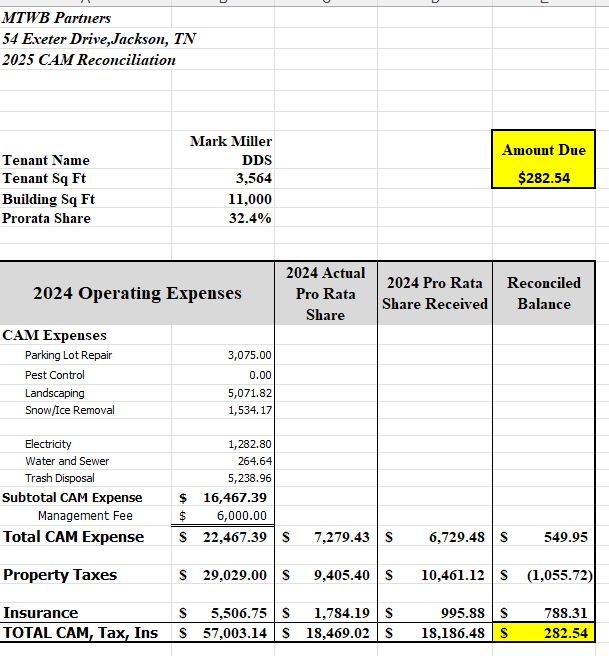
Managing these details isn't glamorous, but it’s how you protect that 6.2% yield. If you’re not on top of your property management, your "6.2% cap" will quickly turn into a "5.1% headache." Investors are now evaluating deals alongside cash-on-cash returns, internal rate of return (IRR), and exit assumptions that aren't based on "hope" but on hard data.
The 2026 Investment Sales Checklist
So, how do you navigate the Southeast market when everyone is touting the same stabilized rates? You look where others aren't. At Buchanan Realty Group, we advise our clients to move past the cap rate obsession and focus on these four pillars:
- Tenant Credit & Power: Does the tenant have the pricing power to pass on inflation to their customers?
- Debt Availability: A 6.2% cap rate looks very different with 4.5% debt than it does with 7% debt. Check out our BRG Market Brief for the latest updates on financing trends.
- Replacement Cost: In many Southeast markets, construction costs have remained high. If you can buy an existing asset at a 6.2% cap that is significantly below replacement cost, you have a built-in safety net.
- Strategic Location: Are you in the path of progress? Our listings focus on areas where infrastructure and population growth are guaranteed, not just promised.

Final Thoughts: The Reality of 6.2%
Does a 6.2% cap rate really matter in 2026? Yes: but primarily as a sign of health. It tells us that the fever of the last few years has broken. It tells us that the market is functional, liquid, and rational.
However, don't let the stability lull you into a false sense of security. The "easy money" era of cap rate compression is over. Success in investment sales commercial real estate today requires a sharper pencil, better data, and a partner who knows the local dirt.
Whether you are looking to renew or relocate or you're ready to offload a portion of your development portfolio, the strategy remains the same: stop staring at the cap rate and start looking at the execution.
If you’re ready to see how your portfolio stacks up against the 2026 benchmarks, contact us today. Let’s get beyond the headline numbers and find the real value in your next deal.