The 2026 Southeast real estate market is moving at a breakneck pace. As we settle into the first quarter of the year, investors are increasingly asking us one question: where should I park my capital for the long haul? While industrial remains a powerhouse, the real debate right now is happening between two of the most resilient asset classes in our region: Retail and Medical Office Buildings (MOB).
At Buchanan Realty Group, we’ve seen both sectors evolve rapidly over the last few years. The "death of retail" narrative has been replaced by a "retail resurgence," while medical office has transitioned from a niche alternative to a mainstream darling. But in a high-interest-rate environment where every basis point counts, which one truly deserves a spot in your Southeast portfolio?
The Medical Office Advantage: Why MOB is the "Recession-Proof" Darling.
If you’re looking for stability, it’s hard to beat Medical Office Buildings. In 2026, MOB rents are hitting historic highs, particularly in the Southeast. The primary driver? Demographics. Our region is a magnet for retirees and growing families alike, and both groups require a high volume of healthcare services.
Unlike traditional office spaces, which are still grappling with the work-from-home fallout, medical office is inherently "place-based." You can't get a root canal or an MRI over Zoom. This creates a floor for demand that few other asset classes can match.
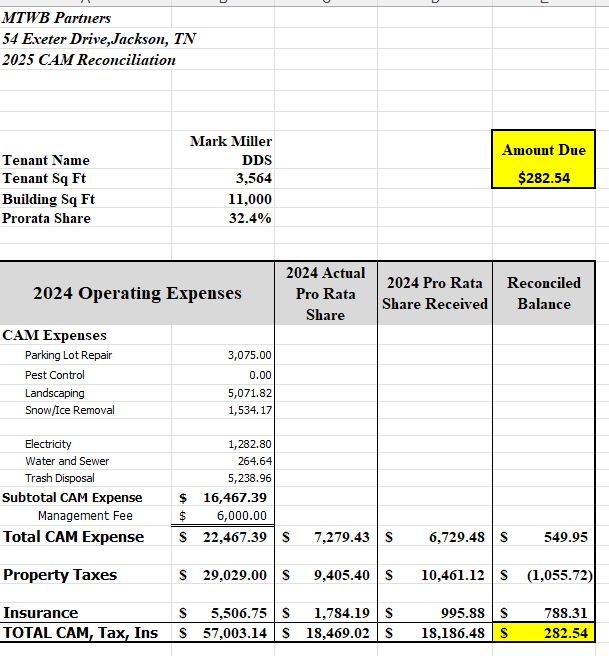
From an investment sales commercial real estate perspective, the "stickiness" of medical tenants is a major pro. Once a doctor or a dental practice like Mark Miller, DDS, builds out a suite, they aren’t going anywhere. The cost to move specialized equipment is astronomical, leading to renewal rates that often exceed 80-90%.

The Financials of Medical: CAM and Lease Structures.
When we look at the numbers, medical office leasing often operates on a NNN (Triple Net) or a modified gross basis. Because medical tenants have high utility and specialized maintenance needs, a clear CAM (Common Area Maintenance) reconciliation is vital.
For example, looking at a 2024 CAM statement for a dental practice in Jackson, TN, we see a clear breakdown of pro-rata shares for taxes, insurance, and maintenance. For investors, this transparency and the ability to pass through these rising costs is a massive hedge against inflation.
The Retail Resurgence: More Than Just "Shopping."
While medical is stable, retail is dynamic. We are currently seeing active shopping centers trading at their strongest valuations in a decade. Why? Because we stopped building new retail for nearly ten years, and now, supply is incredibly tight.
In the Southeast, the "grocery-anchored" center remains the gold standard. Whether it’s a Publix in Florida or a Kroger-anchored center in Tennessee, these assets drive daily traffic that traditional retail can’t touch. We’re also seeing a massive trend called "MedTail": where medical users (urgent cares, physical therapists, dentists) are moving into retail strips to capture that high-visibility consumer traffic.
Retail Sales Growth in the Southeast.
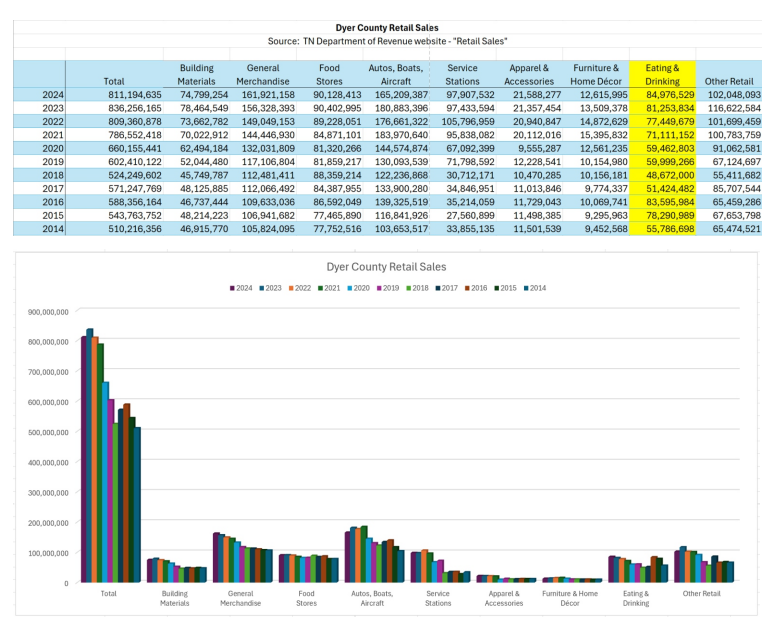
The data doesn't lie. If we look at retail sales data from regions like Dyer County, TN, the growth is consistent. Total retail sales reached $811M in 2024, with eating and drinking establishments and general merchandise leading the charge. This kind of consistent year-over-year growth makes retail real estate Southeast an attractive play for those looking for slightly higher yields than what the highly competitive MOB market might offer.
Comparing the Two: A Side-by-Side Breakdown.
To decide which is better for your portfolio, you have to look at your specific goals for 2026. Here is how they stack up:
1. Tenant Retention and Lease Terms
- Medical: High. Doctors sign 10-15 year leases and rarely move.
- Retail: Moderate to High. National tenants (Starbucks, Dollar General) provide great credit, but "mom and pop" retail can be more volatile.
2. Capital Expenditures (CapEx)
- Medical: High upfront. The Tenant Improvement (TI) allowance for a medical build-out is significantly higher than a standard retail shell. However, once it’s done, you’re set for a decade.
- Retail: Lower. Most retail tenants require a standard "white box" and handle their own branding and interior finishes.
3. Yields and Cap Rates
- Medical: Generally lower cap rates because the perceived risk is lower. You are paying for safety.
- Retail: Can offer higher yields, especially in secondary markets. If you’re willing to manage a multi-tenant center, the cash-on-cash return is often superior to a single-tenant MOB.
The Southeast Factor: Why Our Region Wins Either Way.
Whether you choose medical or retail, the Southeast is the place to be in 2026. CBRE Research forecasts a 12% increase in commercial real estate sales volume this year, and our region is positioned to take a lion’s share of that.
We are seeing a shift where healthcare systems are moving services away from massive hospital campuses and into community-based outpatient settings. This is creating a "sweet spot" for investors: the medical-retail hybrid. Buying a well-located retail center that can be partially converted to medical use is one of the smartest plays in the current market.
If you’re looking at Tennessee industrial real estate or retail/medical opportunities, the fundamentals remain the same: Location, Tenant Credit, and Lease Structure.

The Verdict: Which Should You Choose?
Choose Medical Office if: You are looking for a defensive, "set it and forget it" investment. If you prioritize wealth preservation and predictable cash flow over high-octane growth, MOB is your winner. With outpatient volumes expected to rise over 10% in the next few years, the tailwinds are firmly in your favor.
Choose Retail if: You want higher yields and the ability to "add value." Retail allows for more creative leasing strategies, and in a tight supply market like the Southeast, you have significant leverage as a landlord to push rents during renewals.
At Buchanan Realty Group, we specialize in navigating these exact decisions. Whether you're looking for a stabilized medical asset or a value-add retail center, our team: led by experts like Keaton Dotson and Brandon Buchanan: is here to help you analyze the data and make the right move.
Ready to grow your Southeast portfolio?
Check out our current listings or reach out to Allexus Boyd to discuss your investment criteria. The market in 2026 is moving: make sure you're moving with it.
Want more insights?
Visit our BRG Market Brief for the latest updates on Southeast commercial real estate trends, or explore our Property Management services to see how we protect your investments after the closing table.